


AML Duties: What Investors Should Expect in the Czech Republic
The Czech Republic offers investors a modern, fast-developing business environment and a stable institutional framework. At the same time, market entry and transaction execution often come with compliance duties that cannot be avoided. They may feel formal or conservative, but they increase predictability and reduce transaction risk.
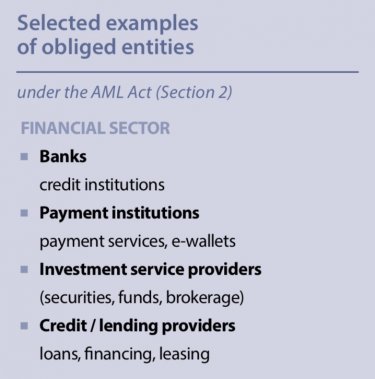
One of these key obligations that investors may face is compliance with anti-money laundering (AML) legislation. AML measures aim to prevent money laundering and terrorist financing and are applied by "obliged entities". The legal framework is primarily set by Act No. 253/2008 Coll., on Certain Measures against the Legalization of Proceeds of Crime and Terrorist Financing (AML Act), which implements relevant EU directives and works alongside directly applicable EU regulations.
In practice, investors encounter AML checks on a regular basis, including in routine situations such as opening a bank account, arranging financing, or conducting M&A and real estate transactions. Although the scope of information requested may appear extensive, it is mandated by law. These procedures enhance transparency, mitigate risk, and contribute to greater predictability and legal certainty for all parties involved.
What AML Means for Investors
Whenever investors deal with an obliged entity, they should expect checks focused on client identification and due diligence measures.
For example, a lawyer assisting a client in a transaction involving financial flows or a real estate transaction may request an ID document and ask the client to complete an AML questionnaire requiring detailed personal information, even if the transaction does not appear suspicious or directly relevant to the legal work.
This is because the AML Act requires identification once it becomes apparent that a transaction will exceed EUR 1,000, as well as when establishing a business relationship or in other situations set out under the AML Act.
Identification may also be followed by due diligence and other requirements under the AML Act.
If the required information is not provided, the obliged entity must refuse the transaction or business relationship. Suspicious transactions must be reported to the Financial Analytical Office of the Czech Republic (FAU).

Identification Methods
Client identification is usually completed in person by presenting an ID document. Where permitted, it can also be done remotely, for example using identity card and at least one other supporting document or by means of electronic identification (e.g. bank identity, electronic identity card) or using statutory identification via an authorised intermediary (e.g., Czech POINT or notary), often with additional verification steps.
Ongoing Regulatory Developments
AML rules in the Czech Republic and across the EU are becoming more harmonised and more demanding in practice. Investors should therefore treat identification and source-of-funds requests as a normal part of many routine transactions and expect them to become even more common over time. AML compliance should not be viewed merely as regulatory formalism but as an essential safeguard of market integrity and long-term investment stability.
| Pavel Martiník Managing Partner Martiník Law Firm, s.r.o. pavel@martinik.legal Jana Říhová Ondřej Cywka |
 |