Carbon-Neutral Industrial Buildings Are Possible in the Czech Republic
A proven European model now allows companies to offset construction-related emissions by directly supporting local forests. Since 2025, a voluntary cooperation framework between private investors, developers, and forest owners has been operating in the Czech Republic, focusing on regional carbon storage, forest ecosystem protection, sustainable development, and education. A unique pilot project has demonstrated how private companies can help restore and strengthen the resilience of local forests by directing funds from industrial construction offsets into certified carbon-sequestration projects.
Through partnerships with forest owners, investors and developers can apply new adaptation strategies focused on carbon storage, climate-resilient forestry, and non-production ecosystem services. Independent European project developers, such as Pina Earth, connect investors with forest owners and manage these certified forest carbon projects. These projects are validated under ISO 14064-2 and audited by independent bodies such as TÜV Austria.
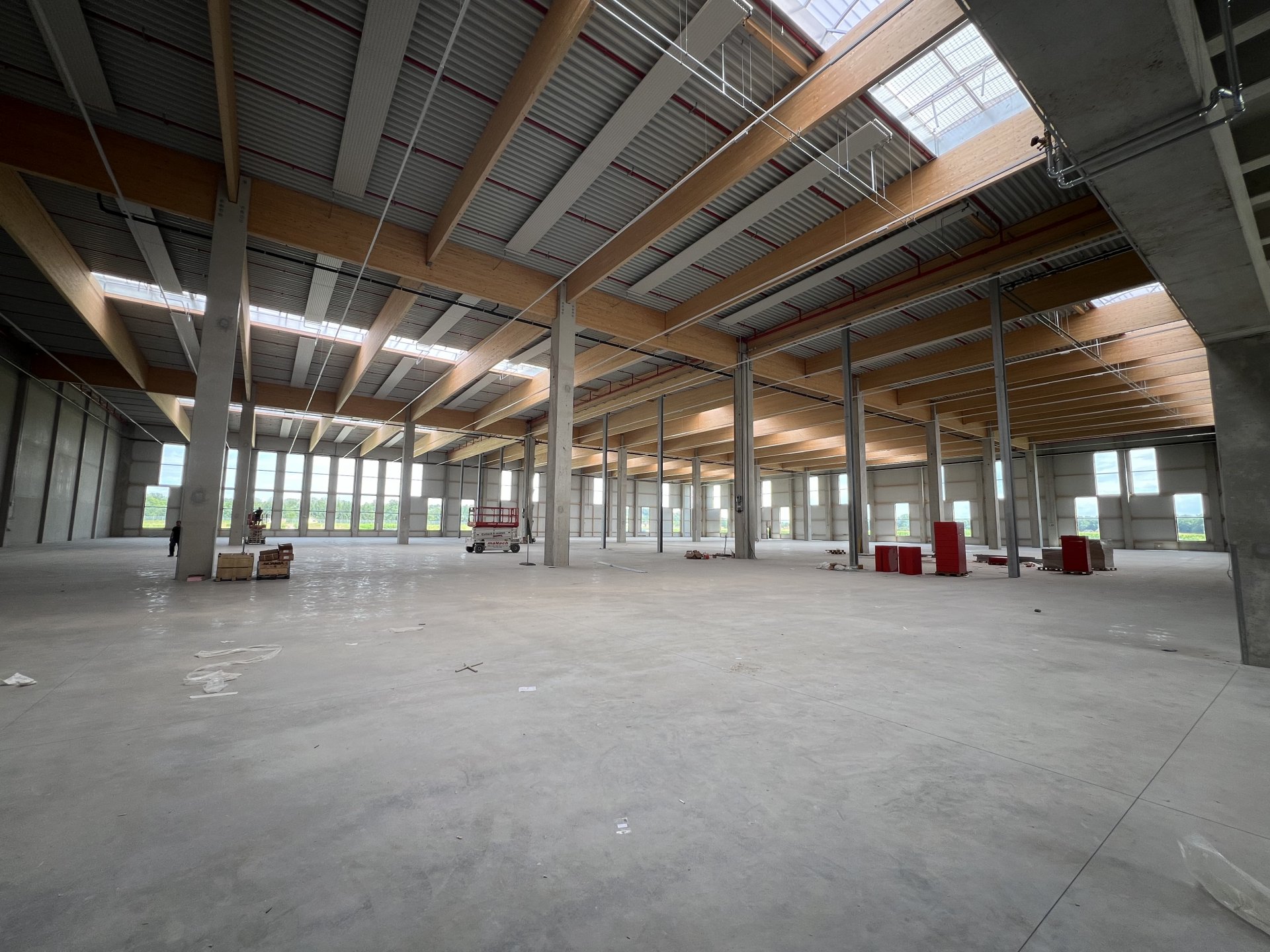
The 2025 pilot project at Business Park Ostrov North became the first industrial building in the Czech Republic to apply UK Net Zero principles, achieving 100% compensation of embodied carbon directly in Czech forests.
Forests cover approximately 34% of the Czech Republic, with a large share historically managed primarily for timber production. Yet, our forests face growing risks: Europe lost more than 600,000 hectares to wildfires in 2023, and Czech forests continue to suffer the long-term impacts of massive bark-beetle outbreaks. Between 2016 and 2022, large-scale forest disturbances affected thousands of square kilometers and released tens of millions of tons of CO₂, comparable to the annual emissions of Czech transport.
Extreme drought (2016–2020) and long-term warming (+2 °C over 60 years) have accelerated forest decline. This calls for immediate action: climate-resilient tree species, sustainable management, targeted protection, and certified carbon-storage projects. Spruce monocultures (about half of Czech forests) are highly vulnerable due to uniform age, dense planting, and limited root development. The future lies in diverse, site-appropriate, and structurally mixed forests that better withstand pests and climate change. Selective harvesting, maintaining forest cover, and leaving deadwood can further support carbon retention and biodiversity.
While operational emissions can already be reduced to zero through electrification and renewable energy, embodied emissions from construction materials remain unavoidable today and represent the key climate challenge for the next decade. Local offsetting, therefore, offers investors a credible sustainability tool while providing forest owners with essential funding for adaptation.
In the 2025 pilot, 17,284 tons of CO₂ were offset, enabling the Colloredo-Mannsfeld estate to strengthen more than 17,000 hectares of forests. The investor obtained independent certification confirming carbon-neutral construction through full compensation of embodied emissions. Significantly, the entire scheme was reflected in the value of the property, which increased by 2%.
|
Jiří Zita |
|