

Biomethane as an important element of decarbonisation
The European continent's goal of carbon neutrality by 2050 is a great challenge. Resources that generate energy from the sun, wind or water will not be enough to achieve this goal alone and hydrogen technologies are still in the early stages of development, which increases the importance of biomethane.
Biomethane has potential chiefly because it is generated sustainably - the process disposes of waste, produces a sustainable gas and is also able to operate within the existing gas infrastructure. Local production increases energy self-sufficiency because there is no need to transport the gas. One indisputable benefit of biomethane is a substantial reduction in emissions, as well as the fact that the gas will not be subject to charges as a result of the planned EU ETS2 emissions trading scheme.
Potential of biomethane in the Czech Republic
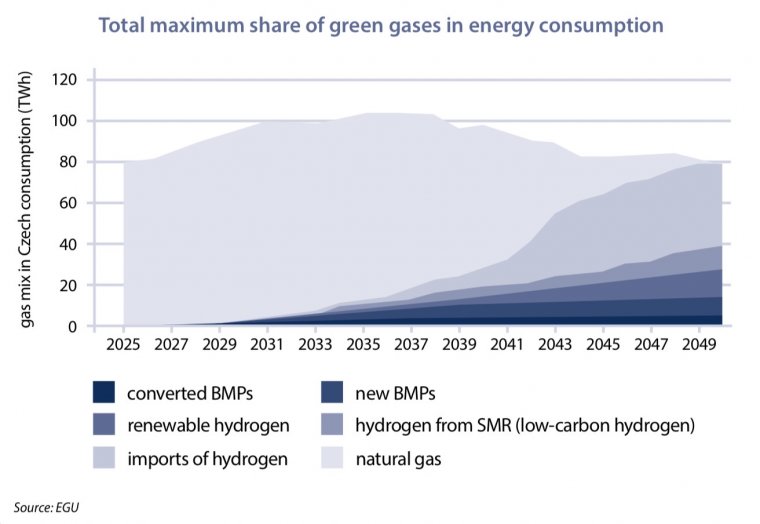
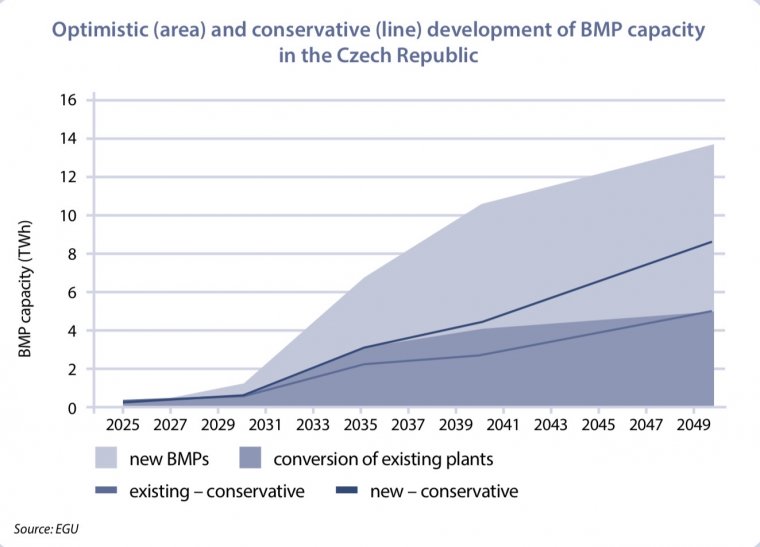
The EGU consulting company's indicates that this gas can potentially reach a proportion of up to 18 per cent of the gas mix supplied in the Czech Republic, while achieving a maximum production rate of up to 14 TWh. Converted biogas plants, along with newly constructed biomethane plants, should assure biomethane production.
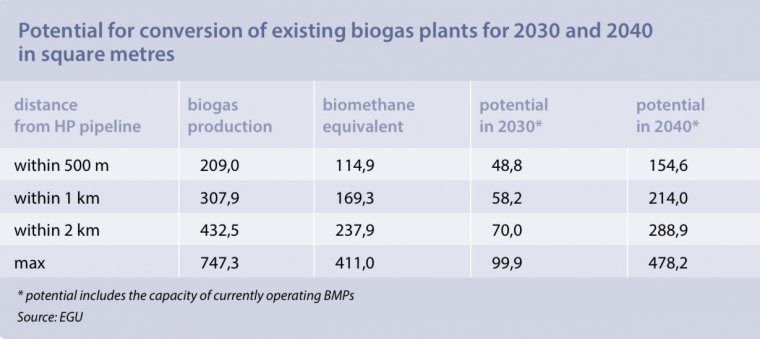
There are currently a total of 540 biogas plants generating electricity in the Czech Republic, 411 of these are agricultural plants and represent the greatest potential for a future transition to biomethane. Operators of biogas plants can now utilise a form of operational support consisting of a guaranteed purchase price or green bonus, which is added to the sales price arranged with the trader.
The operating period was announced as 20 years, which means that operators do not have sufficient motivation to convert their biogas plant to biomethane and inject biomethane into the gas grid. However, support for most plants will end in 2031 and 2032. Biogas is only used to generate electricity, and heat in exceptional cases. Despite this, heat is often wasted, which is an ineffective use of energy. On the contrary, up to 98% of the energy generated by biomethane is utilised, which increases energy efficiency significantly. And this is also a benefit of converting biogas plants to biomethane.
There are only thirteen biomethane plants in the Czech Republic at present. According to the aforementioned scenario drawn up by EGU, biomethane production could reach up to 14 TWh, under the condition of the maximum rate of conversion of current biogas plants and construction of the respective infrastructure. Construction of approximately 207 new biomethane plants is required to achieve this goal.
The biomethane boom in the oncoming decade
Biomethane is one of the more stable renewable sources of energy, particularly when compared to photovoltaic panels or wind generation plants, as these are dependent on the weather and are not capable of generating energy exactly to requirements. Biomethane could also play a crucial role in seasonal energy storage.
Development of biomethane plants is chiefly expected after operational support of existing biogas plants has ended, i.e. between 2030 and 2032. Until then, the gradual expansion of projects that will test trial operation and innovative functions in operation management, is expected. Conversion of biomethane plants near the high-pressure gas grid is the primary goal, with the first projects for injection into medium-pressure gas lines subsequently expected.
Explanatory notesBiogas Plant A biogas plant is a device that processes organic material, such as agricultural waste, plant residues, sewage sludge, food waste, animal manure, etc. The process of mineralizing organic matter into heating biogas is called anaerobic fermentation. Biogas can then be used for combined heat and power (CHP). Biomethane Plant A biomethane plant is a specialized biogas plant that further purifies (upgrades) the output biogas into high-quality biomethane. Biomethane has the same quality as natural gas and can be distributed into the existing gas infrastructure. Another option is to liquefy biomethane into BioLNG or compress it into BioCNG, which increases its further usability, e.g. in CNG-powered vehicles. The biggest difference between biogas and biomethane is the quality and purity of the gas produced. Biomethane is highly refined and meets natural gas standards, while biogas may containa higher proportion of carbon dioxide and other impurities. |
|
András Gróf andras.grof@innogy.cz |
 |